

A Journey Through Vysočina, a Region of Czechia
Vysočina, a lesser-known region of Czechia, previously the Czech Republic, undulating agricultural landscape, dense forests and charming villages.
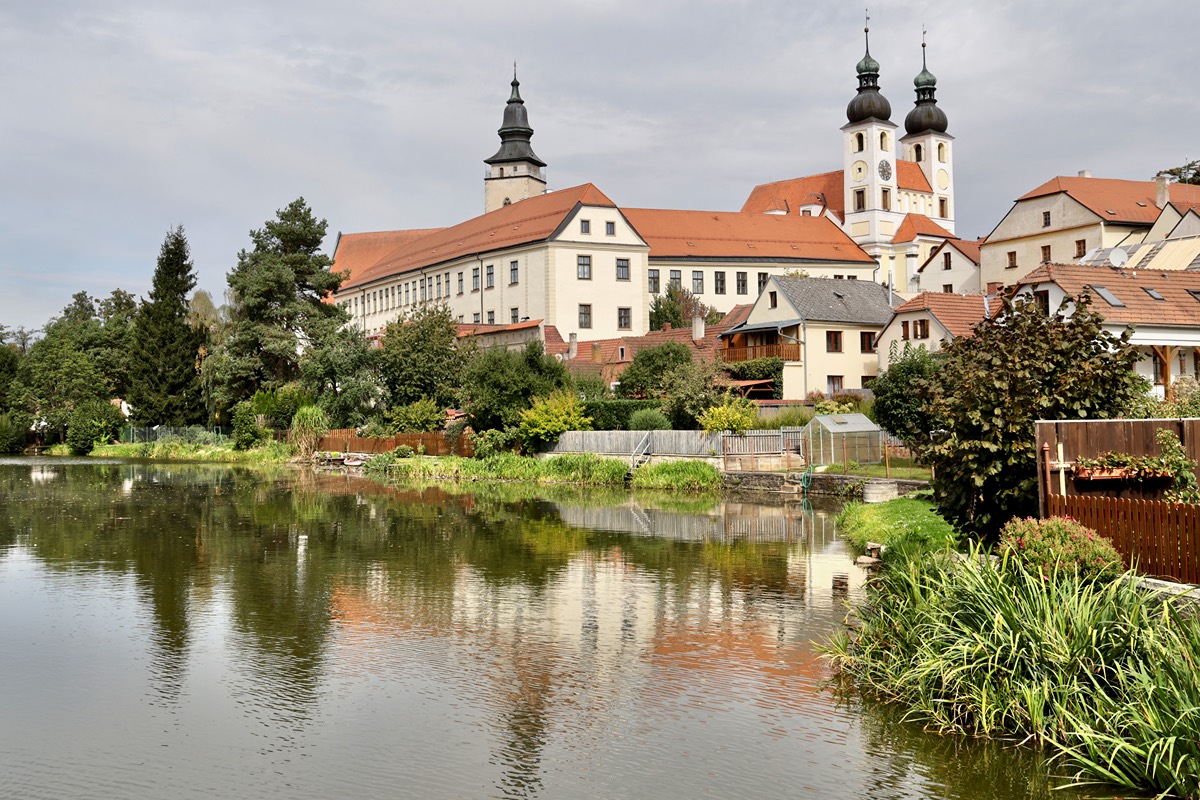
Vysočina is a lesser-known region of Czechia, previously the Czech Republic, where I journeyed through its undulating agricultural landscape, dense forests and charming villages was memorable for many reasons.
The name Vysočina translates as highlands in the Czech language, and this region has two mountain ranges taking in the historical lands of Bohemia and Moravia. It is also home to over 800 castles and chateaux on the hilly landscape once useful for defence.
Quiet roads wind through historic settlements, snaking over rivers and alongside lakes. Its dense forests provide the materials needed for glass-making, which goes back as far as the fourteenth century, achieving worldwide acclaim and UNESCO status.
And that was where my journey really started, at the Glassworks Hut’ Jakub at Tasice in Tasce.

The Glassworks Hut’ Jakub in Tasice
Glassworks Hut’ Jakub was founded in 1796. In its heyday, it produced stunning creations including crystal chandeliers, stained and coloured art glass and ten large vases for Mexico’s presidential palace in Mexico. The name is derived from the main character, Hut’ Jakub, in the television series Sons and Daughters of Jakub the Glassmaker, filmed here in 1985.
In 1990, the glassworks became state-protected and declared to be a cultural monument. After production finally ceased in 2002, the glassworks were transformed into an open-air museum. The site is an extraordinary mixture of farm buildings and mothballed production units.
I was shown around by the owner, Frantisek Milichovský, who brought the factory back to life as he described the process that was once used here. Only glass blowing is done today in the workshop and that was my highlight – a chance to have a go myself. I produced a glass balloon that was neither use nor ornament and immediately smashed it in the reject bucket. Next stop, another famous monument, Lipnice Castle.

Lipnice Castle in Lipnice on Sázavou
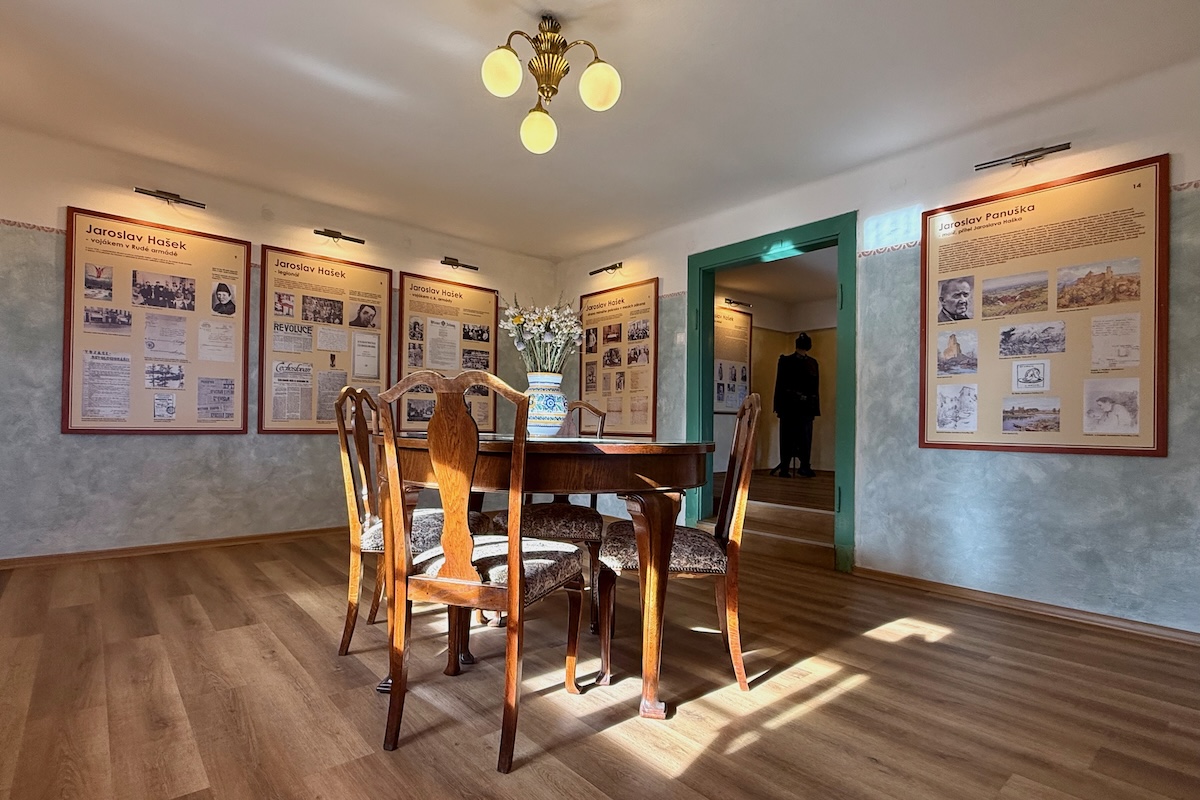
Before exploring Lipnice Castle, I enjoyed a traditional lunch at U České koruny, both a restaurant and a guest house owned by the family of the Czech writer Jaroslav Hašek. He stayed here when he first arrived in Lipnice on Sázavou, then moved to a small house nearby, which is now the Tourist Information and a small museum celebrating the writer. Hašek died at the young age of 40, having completed only four chapters of his novel about a soldier in the First World War (he served in the war himself). These four chapters have been reproduced several times. Hašek also conducted guided tours of Lipnice Castle.
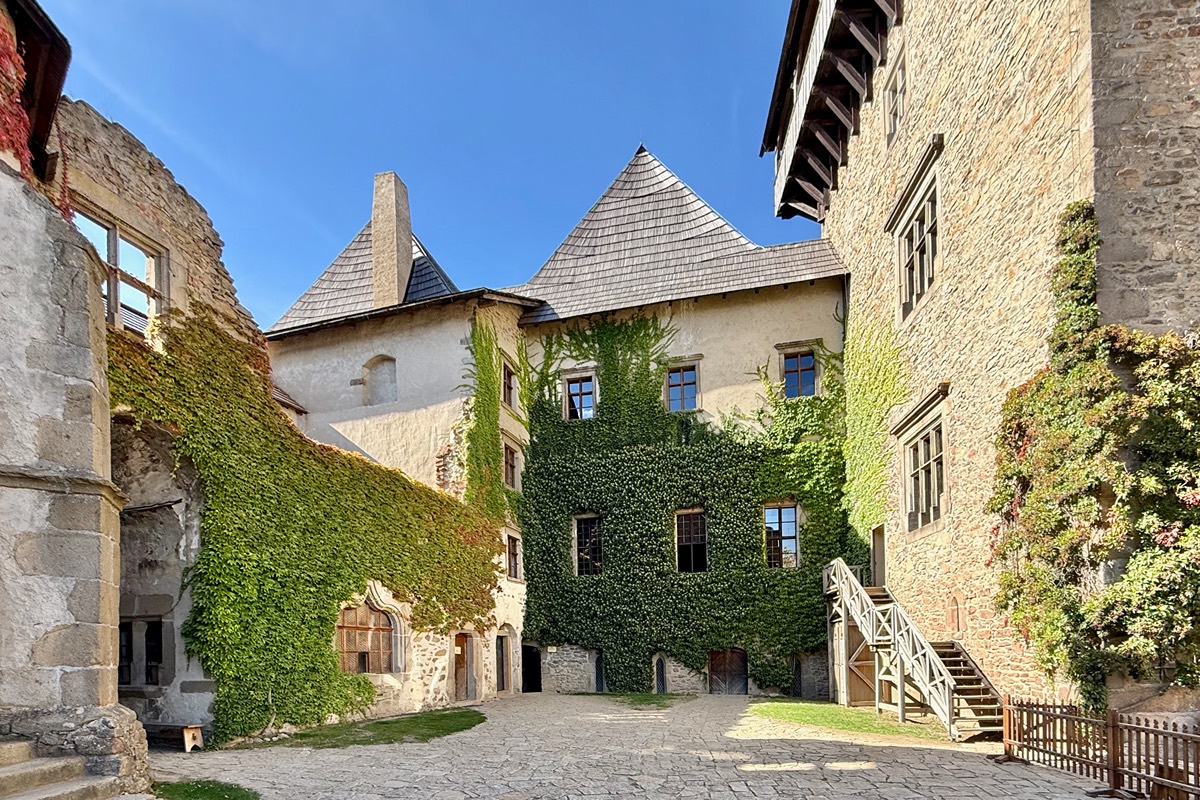
One of the largest Bohemian castles, Lipnice Castle, was founded during the early fourteenth century and converted into a Late Gothic residence for nobility during the sixteenth century.
During the seventeenth century, it was used as an administrative estate and by the eighteenth century it was in disrepair; in the mid-nineteenth century, a strong wind caused the partial collapse of the tower.
Twenty-two years later, the entire castle burnt down. After two attempts to rescue the castle, it passed into state ownership and was partially rebuilt during the 1970s and 1980s. Today the ruins have an air of romance despite being associated with some dark legends. I enjoyed exploring the ramparts and tower, and great views across the surrounding countryside. The cellars are impressive, and the elaborate Chapel of St Lawrence is a must-see.
An unexpected treat awaited me after leaving the castle – a walk through the nearby woods to visit the National Monument of Eavesdropping.
National Monument of Eavesdropping
The National Eavesdropping Monument is an open-air art gallery comprising three elements carved into the cliffs above some flooded granite quarries. These three unique reliefs are: Bretschneider’s Ear, Mouth of Truth and Golden Eyes. It was a lovely way to end the day strolling through trees bathed in late-afternoon sunshine. The following day I headed to Telč, which has a Renaissance Chateau and exquisite old town.

Telč: A Chateau and an Old Town
More than four hundred years ago, Italian masters assisted in the conversion of a burnt-out fourteenth-century Gothic castle to a magnificent Renaissance residence, Telč Chateau. This building is now UNESCO-protected and open to the public.
I went on the Renaissance Halls, the basic tour. Other themed tours include The Suite of the Last Owner, the Castle Museum, the Castle Cellars and Underground and the Castle Courtyard and the Garden (charges apply). Each tour covers a distinctive area of the chateau. There are four elegant Renaissance Halls, each with a uniquely impressive ceiling. I was also very impressed by the sgraffito decorations in the treasury. After taking some time to explore the immaculate gardens and view the exhibition of paintings by Míla Doleželová in the on-site art gallery, I moved on to the old town of Telč.

The old town of Telč was breathtaking. A large cobbled square is lined on both sides by pastel coloured buildings with a continuous row of symmetrical archways fronting the ground floor. Strict building regulations applied when Zachariáš of Hradec Square was built during the sixteenth century after the original buildings were destroyed by a fire. I
talian craftsmen assisted in the transformation of Gothic residences into elegant Renaissance burgher houses linked by arcades. Careful preservation of the Renaissance and Baroque architecture since then has resulted in recognition as a UNESCO World Heritage Site. This square features two fountains and a functioning water pump.
Just beyond the square is the oldest building here, the thirteenth-century Tower of the Holy Spirit. The scramble up the narrow stone stairways was worth it for the views from the top. Roštejn Castle in Doupě was next on my schedule.

Roštejn Castle in Doupě
Our journey to Roštejn Castle took us through one of the famous forests of V. This Late Gothic castle was built on a rocky promontory, and its original heptagonal Gothic tower dominates the landscape around it.
Although the castle has suffered two serious fires, only the wooden elements were destroyed, and the walls survived. This meant extensive repairs could be undertaken between 2017 and 2020. The interior illustrates how the castle changed its purpose from defensive to a hunting lodge. And although I found the large display of hunting trophies disquieting, it is an accurate reflection of that particular era. I was intrigued by the next place on the agenda, the Church of St James the Greater in Jihlava – capital of the Vysočina region.

The Church of St James the Greater in Jihlava
The Church of St James the Greater is in Jihlava, the capital of the region. It is the largest church in the capital. Its construction during the thirteenth century was funded by wealthy silver merchants. The addition of a Baroque chapel during the seventeenth century as resulted in a mixture of architectural styles. But the main interest here is the tiled roof, which has been completely restored. I did a fascinating tour into the roof to see how the repairs were made. I was also able to continue to the top of the tower to enjoy views of the town below and visited the Silver House nearby.

Silver House in Jihlava
The Silver House is an elegant Renaissance burgher house on Masaryk Square in Jihlava. After lying empty for a long time, it was bought by the municipality and has been renovated to preserve the original architecture while repurposing the building.
This beautifully restored multi-purpose building now houses an exhibition of archaeological artefacts found at the site, a tourist information centre and tea room, a small concert hall, frescoed function rooms and a small apartment. A very different experience was awaiting me in Třešť, which I visited the next morning.

Třešť and The Exhibition of Nativity Scenes
A large wooden Christmas crib at the entrance to the town of Třešť is an indication of an unusual tradition that has been upheld by its population for over two hundred years – Nativity scenes. Nearly every home has one on display.
My very enthusiastic guide, Pavel Hájek, led me through a series of small galleries where fifteen different nativity scenes are displayed – one with figures made from ceramic, one using wax, three using paper, including the oldest nativity scene in the exhibition and the rest are made from wood. The most popular wood is linden.
Saint Francis of Assisi is believed to have introduced the concept of the nativity scene after organising the first live reenactment of the birth of Jesus. Clearly, the idea has gripped the town of Třešť as annual contributions are created for the largest nativity scene in the exhibition, which currently numbers 1586 figures.

The town of Třešť itself is very interesting and features the second largest sundial in Czechia. It occupies the whole of the T. G. Masaryk Square with a time pointer of over eight metres, which interacts with shadows on the cobbles below. There is also a charming wooden sculpture of Mr Tau, a popular film and television character who came from Třešť.
And the old Jewish synagogue is now dedicated to Franz Kafka, who has associations with the town. I did not linger as I had an appointment with a brewery.
Bernard Family Brewery in Humpolec
Today the Bernard Family Brewery in Humpolec is a large, modern building with a visitor centre, a shop and a restaurant. The company has come a long way since three aspiring brewers bought a dilapidated brewery at an auction. Their compelling story is told in a video.
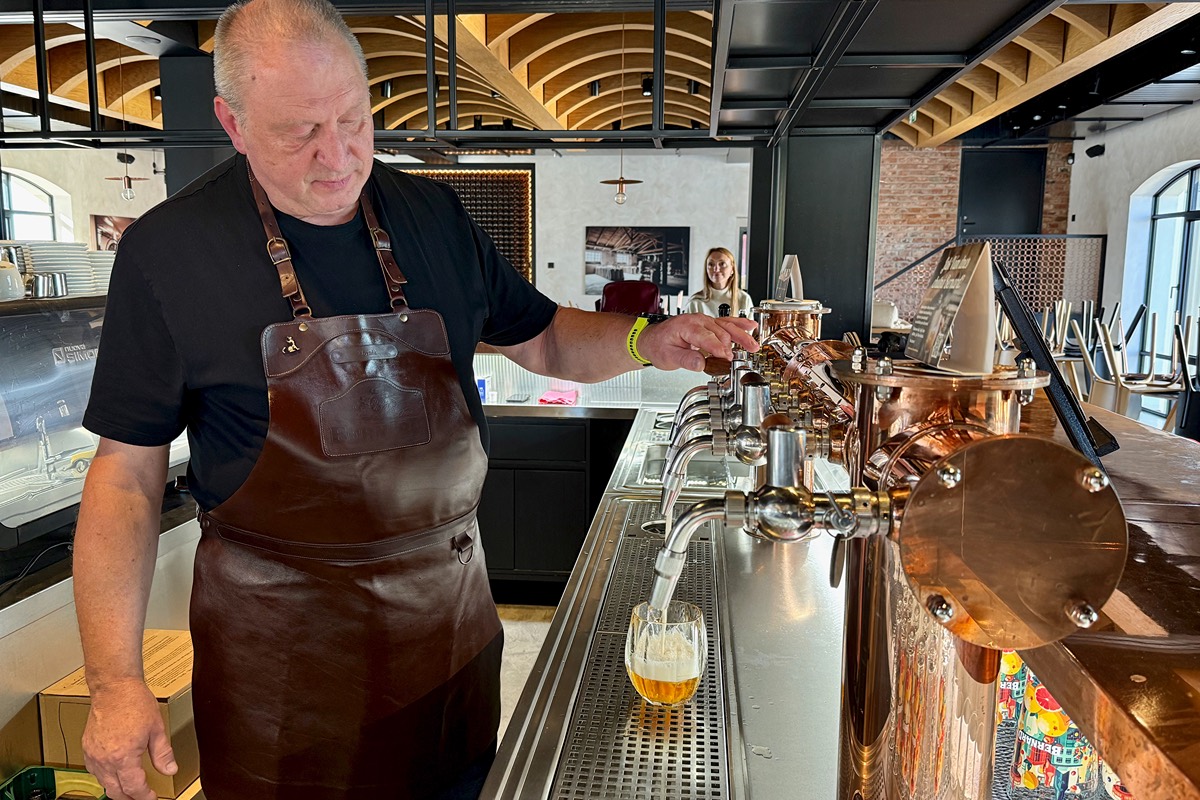
Later I partook in the beer tasting, where I learnt how to create the perfect pint with a good head of froth. When my thoughts strayed to the steel staircase encircling the steam tower, I was invited to climb to the viewing platform at the top. A strong wind had developed and it soon became clear the staircase was not attached to the tower. Nevertheless, it was a thrilling adventure with good views of Humpolec from the top. Also, a great finale to my fascinating journey through Vysočina. Cheers!
FACT FILE:
Getting There: The best airport to fly to is Prague and there are direct flights daily from all
London and most regional airports in the UK to Prague Václav Havel Airport with operators
like British Airways, EasyJet, Ryanair, Wizz Air and Jet2
Stay: I stayed at the Chateau Třešť in Třešť which is a 143 km drive from Prague.
For those using public transport the capital Jihlava would be the best place to stay as there
is a direct bus link from Prague Václav Havel Airport
Getting Around: A hire car is the easiest way to explore Vysočina but public transport is
available.
More Information: More information is available here about Czechia and Vysočina