

Top 10 things to see and do in New York
New York is the city that never sleeps. Here's what you must check out.

New York, the city that never sleeps, remains one of the most thrilling, vibrant, and utterly unforgettable destinations on Earth. What endures is its standing as a global capital of culture and entertainment, packed with world-class museums, iconic landmarks, and dazzling theatres. Whether you come for legendary shopping, a Broadway premiere, jazz in the West Village, the unforgettable sweep of the Manhattan skyline, or simply to soak up the energy, this is the city break everyone should experience at least once. Here are suggestions for your first trip to the Big Apple.
Central Park – New York’s Green Heart
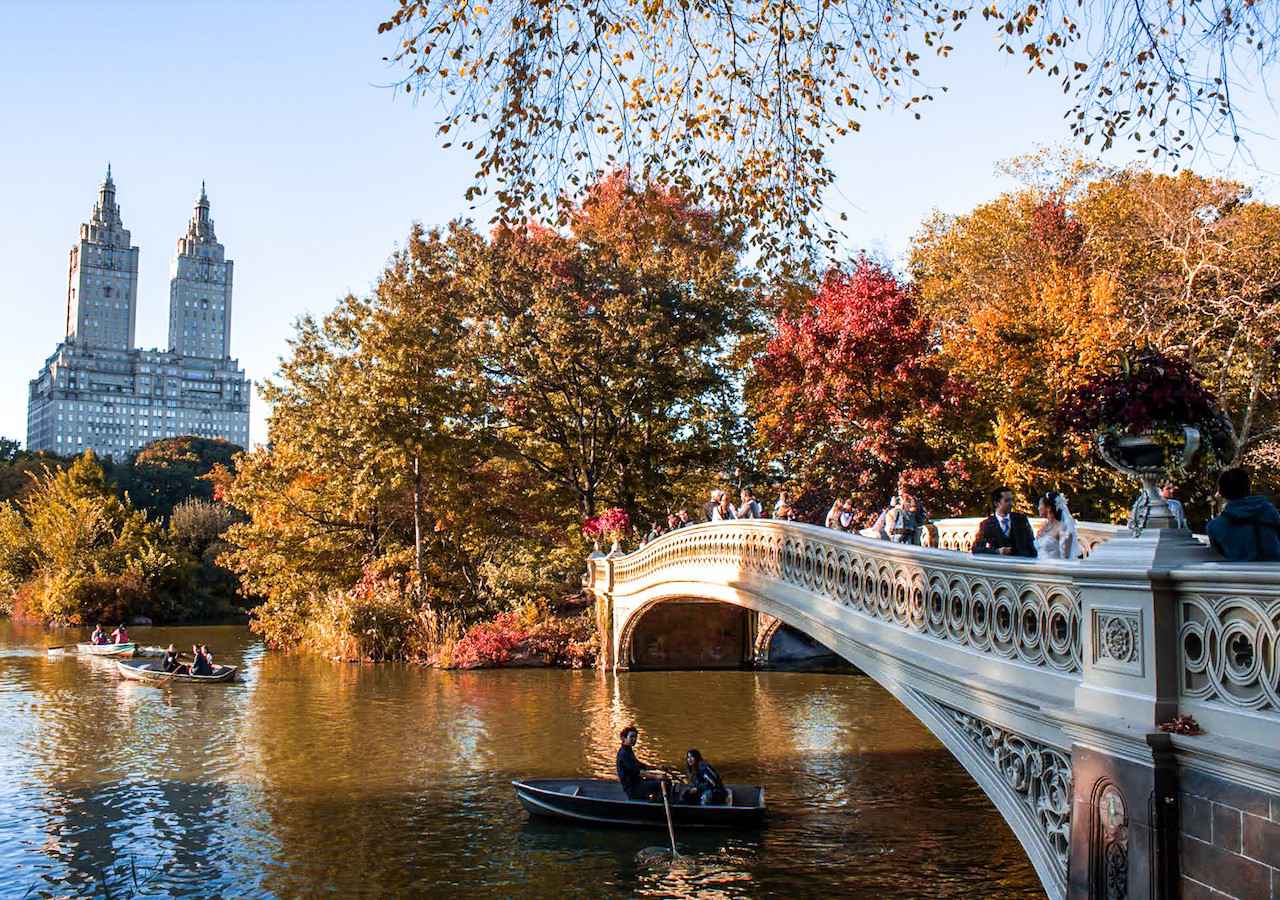
New York’s chill-out zone, Central Park, comprises 843 acres of rolling meadows, shimmering lakes, ancient woodlands and secret gardens, stitched right into the island of Manhattan. It was the first landscaped park in the United States and Manhattan locals escape here from their skyscrapers and hectic lives to enjoy some time away from the madding crowd. The park has appeared in so many films and TV series, it even has celebrity status.
Follow the Bethesda Terrace stairs to the fountain, where musicians play then wander past the Conservatory Garden, a trio of floral splendours that shifts with every season. Stand beneath the grand American Elms along the Mall, where writers, artists gather. Visit the Strawberry Fields memorial a three-acre landscaped area of Central Park dedicated to the memory of John Lennon who used to live across the street in the Dakota building. Or simply find a bench, open a book, and let the city slow to your pace.
Central Park hosts the annual Summerstage. This is a series of free concerts held throughout the summer at the Rumsey Playfield in the centre of the park. In all, there are 1,100 free concerts scheduled to take place, not just in Central Park but also city-wide in public spaces throughout New York.
Empire State Building

First-timers to New York should go directly to the lime-stone art-deco dazzler, the Empire State Building. The shimmering gold lobby is enough to make the trip worthwhile, but it is the views of Manhattan that you are after.
The vista from the observatory on the 86th and 102nd floors is superb. Be sure to download the free app Empire State Building Observatory Experience App from the Apple Store or Google Play.
The queues can be tiresome, but getting there really early or very late helps. Or to avoid them altogether, buy your tickets online.
For a magical moment, get there in time for sunset and watch the play of light as the sun sets over the city. Incidentally, the Empire State Building soars 1,454 feet above Midtown Manhattan.
350 Fifth Avenue, Open 8am – 2am, Admission $38 for children, $44 for adults for 86th floor Observatory.
Statue of Liberty

This imposing statue of a woman wearing a stola, a radiant crown and sandals, trampling a broken chain whilst carrying a torch in her raised hand, was designed by sculptor Frederic-August Bartholdi. She stands tall in the middle of Liberty Island.
She is often referred to as “Liberty Enlightening the World’ and was a gift from France to celebrate the American Centennial in 1885. It was unveiled on October 28th 1886, and is the ultimate symbol of the American Dream. It is whispered that her stern face of was modelled on Bartholdi’s mother due to the uncanny resemblance, though this has never been confirmed or denied by the sculptor.
At 305 feet (93 meters) tall, it remains America’s finest visual and spiritual landmark and the first thing you see when you sail into New York’s harbour.
You can enter the pedestal and the monument’s crown but buy your tickets well in advance. The Statue of Liberty exhibit is located on the second floor of the statue’s pedestal and explains her symbolism and you can see a full-size replica of her face and feet.
Admission: Free. Ferry ticket to Statue of Libery and Ellis Island costs from $25 for adults and $17 for kids.
Ellis Island

Ellis Island, reached via ferry from New York, was the gateway for over 12 million immigrants from 1892 to 1954. All were in search of freedom of speech, freedom of religion and prosperity.
Since 1990 it has reopened to the public as a museum and is one of New York’s most moving attractions. The museum depicts the story of immigrants to America through their eyes, has a wall that commemorates more than 500,000 immigrants and their families. There are also interactive exhibits and if you are trying to trace your ancestors this could be a good place to start.
Admission: Free. Ferry ticket to Statue of Libery and Ellis Island costs $24 for adults and $16 for kids.
Metropolitan Museum of Art

The Metropolitan Museum of Art, located on the eastern edge of Central Park along the Museum Mile, was created by a group of New York bankers and financiers who felt that their home town needed an encyclopaedic museum of world art.
Known generally as The Met, this amazing museum delivers. Access is from the sidewalk on Fifth Avenue, where palatial steps, Doric columns and tall windows greet you. Inside, immense stairways and water fountains add glamour and grandeur and a sense of awe. Even if you ‘don’t do museums’, this one will still be a winner.
This huge museum offers every category of art in every known medium from every part of the world. In all, there are a staggering 2 million works of art so there’s bound to be a section you’ll love. Perhaps The Temple of Dendur and Egyptian Art wing, The Equestrian Court in the Arms and Armory section, the collection of Cypriot Art, the Picassos, the Greek and Roman sculptures or the rooftop garden with its modern art installation.
Tip: Allow at least a few hours, get a map and plan your route carefully otherwise you’ll probably get lost, and wear comfy shoes. Don’t leave without visiting the rooftop because from here you’ll get a staggering view over New York city.
Open Sunday – Thursday 9.00am – 5.30pm, Friday and Saturday 10.00am – 9.00pm Admission $25 for adults; $17 for seniors; $12 for students.
Museum of Modern Art (MoMA)

This amazing museum, located in midtown Manhattan, is New York’s most prestigious and has the largest collection of artwork created between 1880 to date. To give you some perspective, MoMA‘s library and archives hold over 300,000 books, artist books, and periodicals, as well as individual files on more than 70,000 artists, so allow at least a couple of hours for your visit. If you get hungry while you are there, dine at its award-winning restaurant called The Modern.
53rd Street. Museum hours: 10:30 a.m.–5:30 p.m, (until 8.00pm on Fridays)
Admission: $25 for adults. Under 16s go free.
Times Square & Broadway

Times Square, located in New York City’s vibrant borough of Manhattan, is the central hub for nightlife, restaurants and entertainment for New Yorkers. If it looks familiar when you get there it’s because it is featured in hundreds of TV productions. In particular, the Robert De Niro and Jodi Foster film Taxi Driver was shot here.
It stretches from West 42nd to West 47th streets and has the accolade of being one of the world’s most iconic landmarks. At night, the square simply dazzles with the bright lights, animated advertisements and large TV screens showing newsreels. Depending on your perspective, it’s either a neon nightmare or the place to be.
Broadway, the city’s theatre district is located just off Times Square and is home to over 50 theatres, more than 30 hotels, cinemas, shops, restaurants and bars. Everyone should catch a show before their leave New York. Most musicals do afternoon performances on Wednesday, Saturdays and Sundays so you could squeeze in a matinee in between shopping and dinner.
The High Line
The High Line started life as a decrepit elevated railroad track on Manhattan’s west side. Neighbourhood residents in partnership with the City of New York, saved it from demolition and turned it into a funky public aerial park n 2009. And it’s easy to see why it has made it onto every visitor’s bucket list of must-see sights. Being 30 feet in the air, this is the place to get away from the concrete jungle and admire a myriad of public art, landscape gardens, and city views in every direction.
This 1.45-mile-long stretch has several entrance points from three of the city’s most lively neighbourhoods: the Meatpacking District, West Chelsea and Hell’s Kitchen.
The High Line starts at Gansevoort Street to West 20th Street. The following section stretches to West 30th Street. The third runs from West 30th to West 34th Street. If you walk through the part-covered 14th Street Passage, you can watch the daily video series. Then continue o to the Chelsea Market Passage where you can still see remnants of the old train tracks and grab a bite at the open-air food court.
Access to the High Line is free and you can visit from 7am to 7pm (10pm in the summer).
Grand Central Terminal

Manhattan’s Grand Central Station is famed worldwide as the bustling hub of transportation. Constructed in 1903-1913, it is a grand Beaux-Arts building serving as a transportation hub connecting train, metro, car and pedestrian traffic. Every day a staggering 5000,000 travellers pass through the monumental Grand Central railway station every day, yet few people know about the Whispering Gallery.
Find it just outside the Oyster Bar restaurant in the lower concourse in a domed area where people generally congregate. As elsewhere in New York, the noise is constant, but amazingly, if you stand facing a pillar and whisper, someone standing facing a pillar diagonally opposite to you will hear it. Try it with a friend – it is actually more discreet than using your mobile.
When you leave Grand Central Station choose the tunnel marked Lexington Avenue which leads to the stunning Art Deco Chrysler Building.
World Trade Center – Ground Zero

The skyline on Lower Manhattan used to have the twin towers of World Trade Center but their destruction in the September 11 2001 terrorist attack left a gaping hole both in the landscape and in the city’s soul. Today, this area (bordered by Vesey Street to the north, the West Side Highway to the west, Liberty Street to the south and Church street to the east) is referred to as Ground Zero and there is a Wall of Heroes that lists the names of those who died that day. There are also photos of how the World Trade Center was initially constructed in the 60s and finally opened in 1972.
After much debate, the Lower Manhattan Development Corporation set up a competition for ideas of how to use the land. A design for a tower, to be called 1 World Trade Center and nicknamed Freedom Tower, submitted by Daniel Libeskind was finally selected. The new design was unveiled on June 28 2006 and the building will most likely be ready for occupancy sometime in 2013. When completed, 1 World Trade Centre will be 1,368 feet (417 m) and be the tallest building in the United States and the tallest all-office building in the world.
Next to the new tower is the Ground Zero memorial. A very peaceful place with a waterfall and the names of all the people who lost their lives that day inscribed around the edge. To visit the memorial, book a visitor pass for free online or on the day.
Rockefeller Center

The Rockefeller Center, built by the Rockefeller family, is a huge but attractive complex of 14 commercial limestone buildings around a central fountain that overlooks its world-famous ice rink.
The complex stretches from 48th Street to 51st Street and Fifth Avenue and the Avenue of the Americas (Sixth Avenue). It houses the largest indoor theatre – Radio City Music Hall – so named after the complex’s first tenants – the Radio Corporation of America. Beneath is a complete shopping extravaganza with cafes and restaurants.
Climb to the top of the Rockefeller Center — the open-air deck feels closer to the sky, and you see the Empire State Building itself in your frame.
Where to Eat
For lunch tead to Chinatown and grab authentic dumplings, noodles, and steamed buns that taste like centuries of tradition. Or try Little Italy nearby for warm, lively, and full of flavour. Best of all, head to a classic deli, try Katz’s or a neighbourhood favourite, for piled-high pastrami on rye, a New York staple as generous as the city itself.
Enjoy dinner in Williamsburg try Lilia, or check out Park Slope and enjoy farm-to-table warmth, rooftop drinks, or cosy bistros. The vibe here is creative, welcoming, and entirely its own. Steak lovers should try Keens Steakhouse, opened in 1885, and their mutton chop and primary rib are legendary. Other good restaurants to ry are Carmine’s or Gallagher’s, both five mins from Times Square
TOP TIP TO SEE THE HARBOUR: The Staten Island Ferry offer a free 25-minute ride around the harbour. You’ll pass by (without stopping) at the Statue of Liberty and Ellis Island.
TOP TIP FOR SHOPPERS: Who wouldn’t put shopping on their To-Do list in New York. Sales start December 26 and last till the end of February. Expect 30-60 per cent at high street stores and up to 80 per cent in warehouses.
Look out for Barneys Warehouse, 255 West 17th Street, for savings of up to 80 per cent on labels such as Prada and Chole. Scoop, 532 Broadway, stocks the coolest brands, Earnest Sewn jeans and Sigerson Morrison shoes are much cheaper than in the UK. Non-designer wear sales are really good at Saks and Bloomingdales. Macy’s can be chaotic.
TOP TIP FOR DIE-HARD SIGHT-SEE-ERS: Buy a New York CityPass for $116, which gives you entrance to all the major museums plus a range of tourist attractions, including the Empire State Building and a cruise around the Statue of Liberty.
Practical Essentials
- Best time to visit: May–June and September–October — mild weather, fewer crowds, spring blooms or autumn gold. Winter sparkles with festive magic; summer hums with outdoor concerts and street life.
- Getting around: The subway is your lifeline — fast, far-reaching, and the authentic way to travel. Walking rewards every step; blocks are short, discoveries are constant.
- Stay mindful: Tipping is standard — 15–20% in restaurants, for taxis, and for hotel staff. Wear comfortable shoes — you will walk. Keep your wallet in an inside pocket in busy areas.
- Atmosphere to embrace: New Yorkers may walk fast, but they stop to help. The city feels big, yet it welcomes you — and once you let it, it never quite lets go.