

Artisans and Adventures in the Swiss Canton of Vaud, Switzerland
Immerse yourself in cheesemaking, Chablais vineyards, salt mines and glaciers for a few days in Switzerland's Vaud Canton.
My stay in the Vaud Canton of Switzerland, began in the small mountain village of Rougement in Pays d’Enhaut. I flew to Geneva and then travelled there by train. A picturesque journey skirting Lake Geneva before zig-zagging up the mountain on the Golden Pass Belle Époque train to Rougement.
On arrival, I had time for a stroll around the village. There did not seem to be anything remarkable about this village apart from the eleventh-century Romanesque church of St Nicholas and a sixteenth-century castle built by the monks of Cluny. I was soon to be proved wrong.
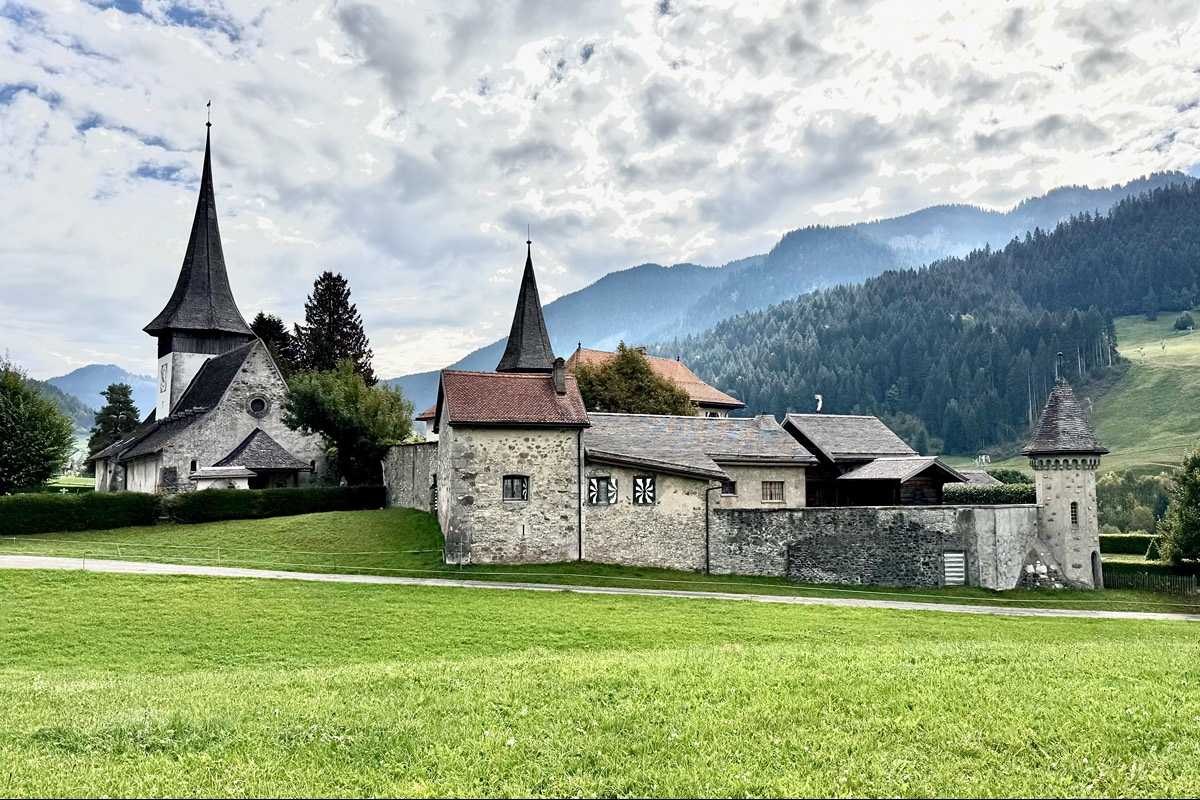
Rougement in Vaud, Switzerland
The next morning, I met Guy, a local guide for a walking tour of Rougement. Before setting off, Guy related some history of the village. It was hard to believe that this prosperous settlement had been poor until the middle of the nineteenth century. Famine had driven residents to the New World, and the English moved in to experience the well-being of the mountains once shunned as being the haunt of devils and demons. The development of hotels, the arrival of the railway and the proximity of the wealthy town of Gstaad laid the foundations for the mountain resort it is today.
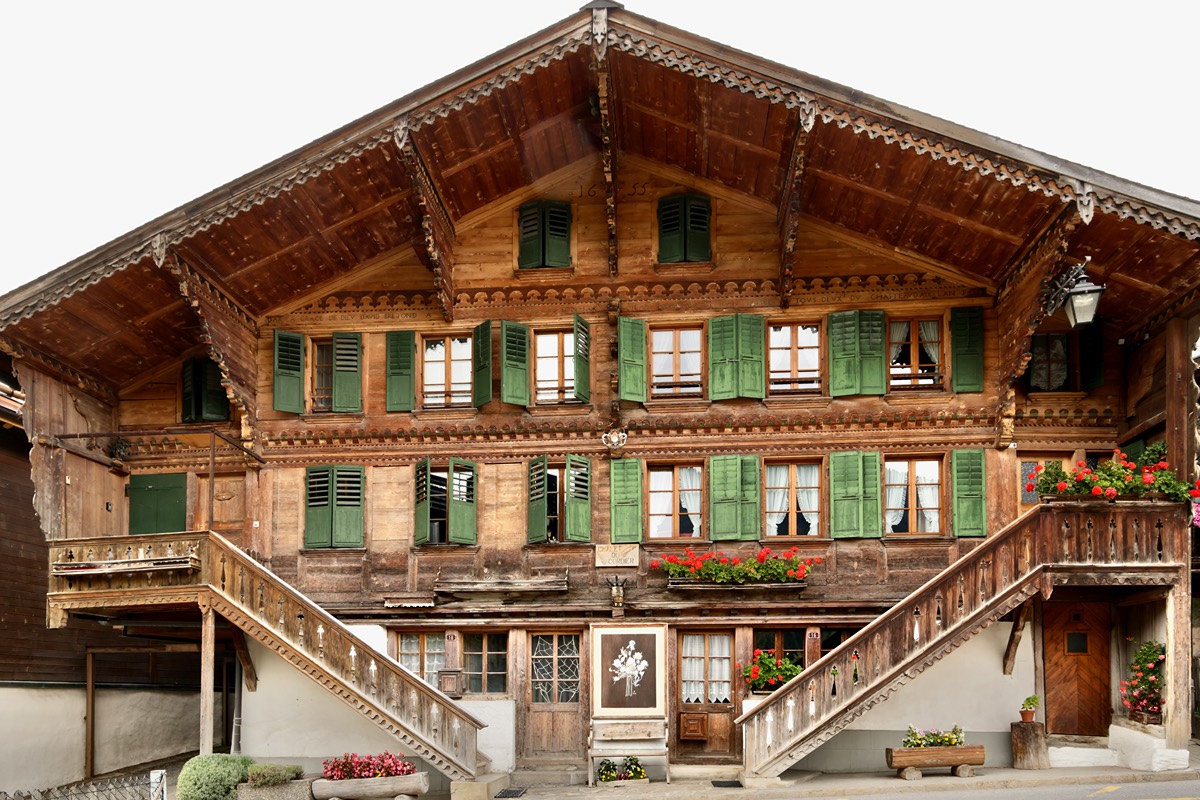
Some of the old chalets in Rougement have two flights of steps at the front and two separate entrances. Guy said it was because they often housed two families. Most likely different generations of the same family. He pointed out the old tradition of inscribing the build date of the chalet on the front and a passage from the scriptures. Some of these chalets date back to the seventeenth century and form a grand parade along the main street of the village often displaying agricultural ornaments, hunting trophies and wooden sculptures. Guy also talked about the tradition of grazing cows on the alpine meadows in the summer and making cheese in the summer chalets. I learnt more about that tradition over lunch.
The Cheese Makers of Vaud, Switzerland
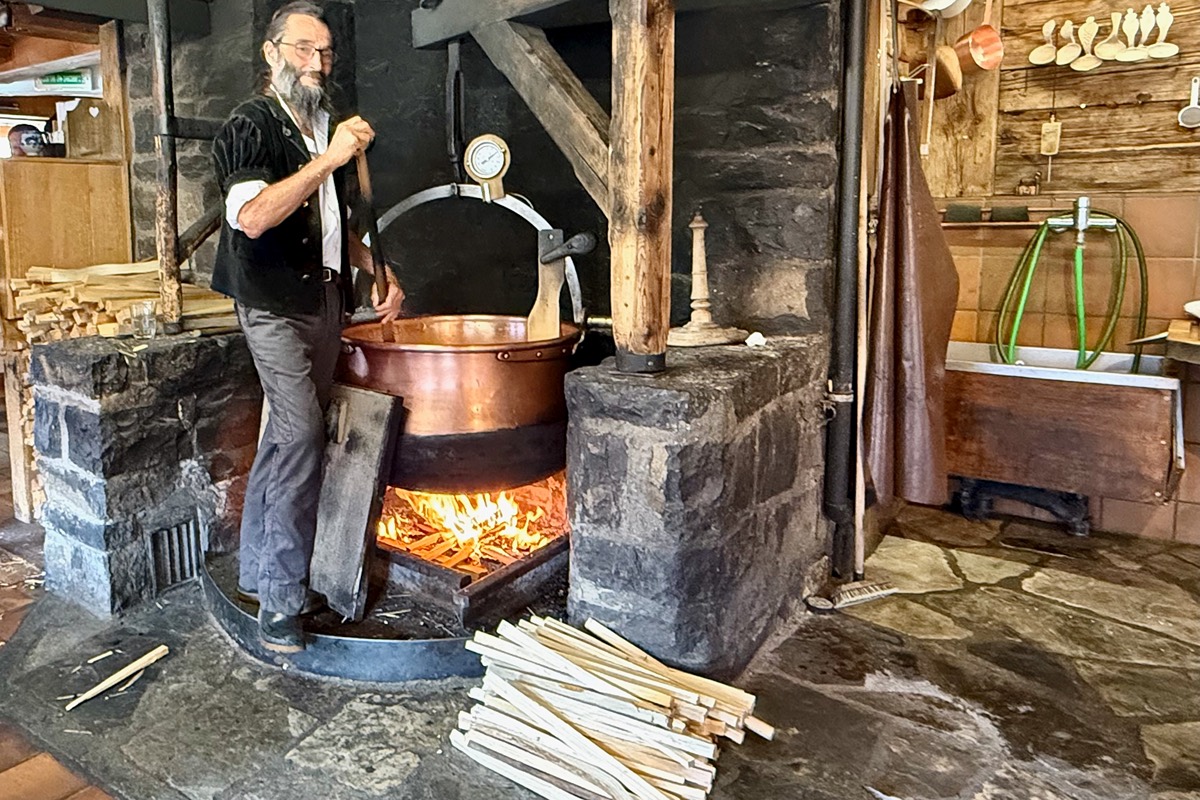
Traditional cheese making still takes place in the summer farms of Vaud. But I did not have to climb the mountain for a demonstration, as this is a regular occurrence at the restaurant, Le Chalet in Château-d’Œx. Between 160 to 200 litres of organic milk are transformed into 16 to 20 kilos of hard cheese over the heat of an open wood fire. Once the cheese has been transferred from the large copper vessel in a muslin cloth and then pressed into a wheel, it is left to mature in a cellar before it is edible. The cheese is labelled Le Chalet Bio cheese and is a Pays-d’Enhaut, Produits Authentiques branded product. I watched this process while enjoying a traditional Swiss Rösti in the restaurant, produced using local produce.
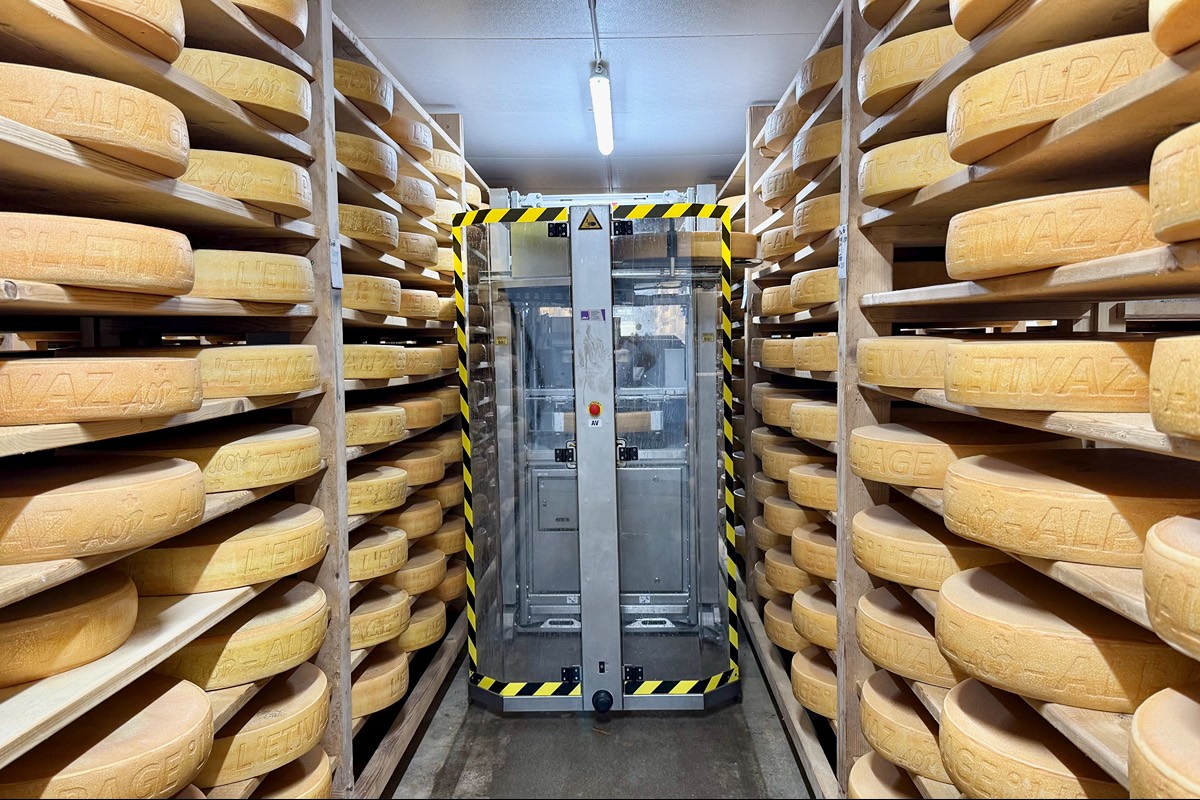
That afternoon we visited the co-operative cheese factory, Maison de L’Etivaz. Travelling around on public transport was easy as I had a Swiss Travel Pass valid on buses and trains. My arrival coincided with the arrival of a farmer bringing a huge wheel of cheese to the factory. Caroline, my guide, told me the cheese would be taken into the factory and submerged in a salt bath for twenty-four hours. This ensures the rind will form to preserve the cheese. The cheese wheels are then turned and rubbed with salt every day for a week.
Farmers and their families used to deal with the entire process which was very hard work and it was difficult to maintain the quality of the cheese. In 1930 the local farmers formed a co-operative and the first communal cellars were built at L’Etivaz in 1935. Since then, they have been re-modelled and expanded and the co-operative has extended its reach beyond the immediate locality. It is now a very slick operation. Robots are used to turn the wheels of cheese. Records are kept and tests ensure quality is maintained and income is properly distributed. After my tour of the factory, I sat outside in the sun and tasted 5 cheeses of different maturities. I checked my itinerary for the next day. I was going to some salt mines, an essential ingredient for cheese making.
The Salt Mines at Bex in Vaud, Switzerland
Bex Salt Mines are the oldest active salt mines in Switzerland and the extraction of salt from the rocks has been done for centuries. After pulling on a warm sweater (recommended in advance information) I clambered into one of the small carriages of the mine train. It rattled along deep into the mountain and stopped in a large cavern where our tour began. It was a large group and we were kept in order by a lively, French guide, Dominique. His commentary was in French but I used the SmartGuide app to follow it in English. It was a fascinating tour and hard to believe that the old workings we visited had been hewn out of the rock by hand. The crude techniques once used to inject water into the rocks to dissolve the salt have now been replaced by state of the art machinery. The disused galleries have been turned into a museum tracing the history of the workings.
Originally the miners had to carry the rocks themselves in heavy rucksacks and trek up long flights of steps. A slide was put in to shorten this journey. Visitors are invited to have a go. I did and enjoyed a few moments of laughter and bonding. It was a fascinating visit and a great end to my last full day in Vaud which had begun exploring another long established local industry, wine-making.
Chablais vineyards and Aigle Castle in Vaud, Switzerland
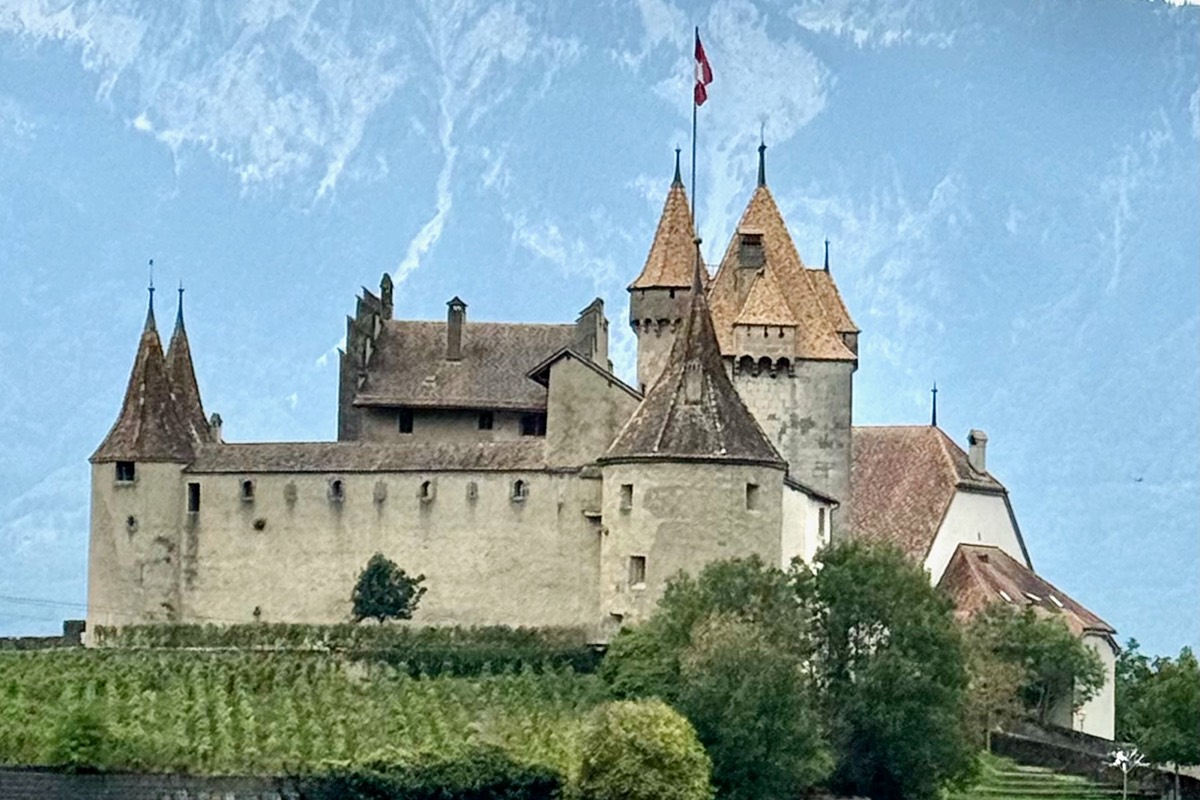
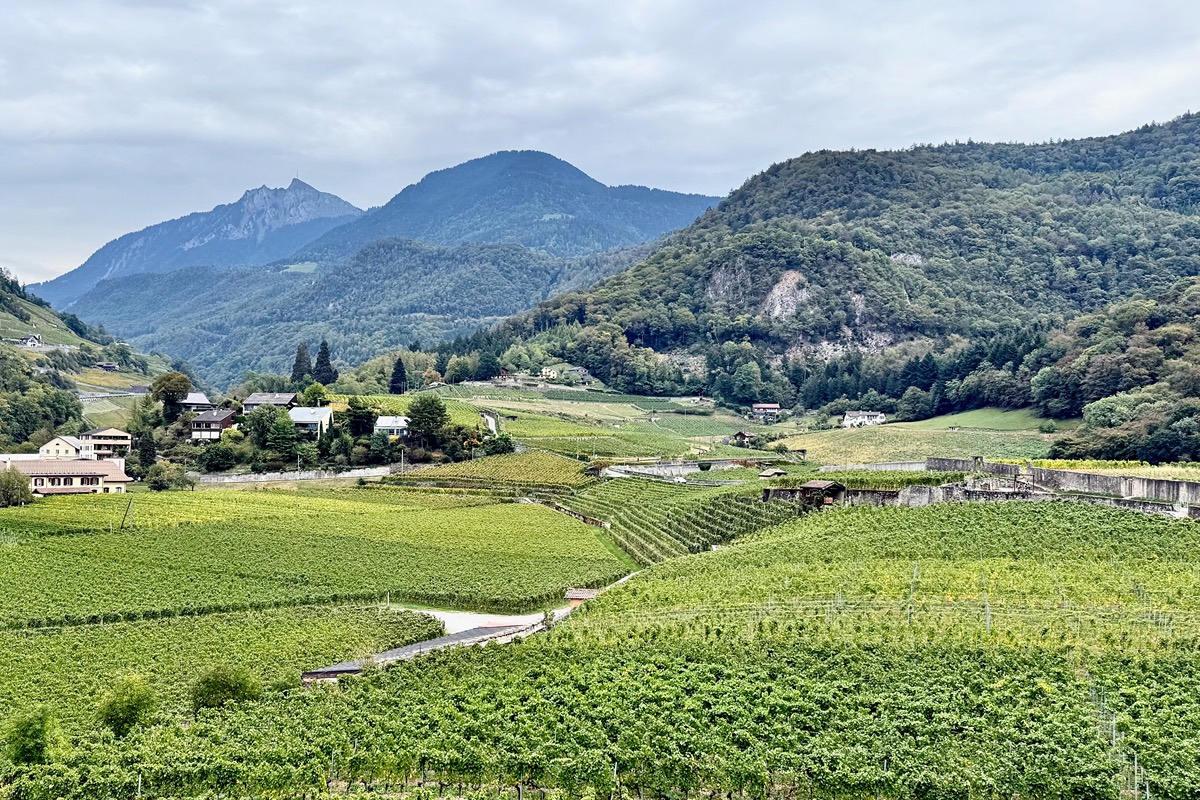
Aigle Castle rises above row upon row of vines like sentinels around the promontory it stands on. The castle dates back to the end of the twelfth century when it was built by the Lords of Aigle to defend the lands surrounding it. Today it is a magnificent venue for celebrating weddings and other occasions and home to the Vine and Wine Museum. My tour of the castle was fascinating and took me from the top of its tower to the prison cells underground. From the tower I had wonderful views of the surrounding Chablais vineyards – a good precursor to my visit to the Cave Alain Emery wine cellars next door.
Five generations of the Emery family have been producing wines from the vineyards that surround Aigle Castle. Alain was my guide, and I had three tastings relating to the process of making wine. First, the juice from freshly pressed grapes, next the juice after fermenting for two weeks, and finally, three examples of the finished product. The latter were accompanied by a cheese and sausage platter. I was impressed by the quality of the wine and asked Alain why we could not buy them in England. He said they could not produce enough for the home market, so they did not export. That afternoon I moved on to the ski resort, Les Diablerets and a morning of adventure on the Glacier 300.
Glacier 3000 above Les Diablerets in Vaud, Switzerland
The two-stage Col du Pillon cable car whisked me to its top station Scex Rouge in about fifteen minutes. I expected there to be a good covering of snow at the top but was disappointed to find just a small area of slush surrounded by dark scree. Stepping out onto the viewing platform, the first thing I noticed was the metal track of the Alpine Coaster, the highest bobsleigh run in the world, glinting in the sun. It was irresistible, and after a hesitant start I was soon speeding around the curves towards the bottom. Once back at the top, I headed for the Peak Walk by Tissot.
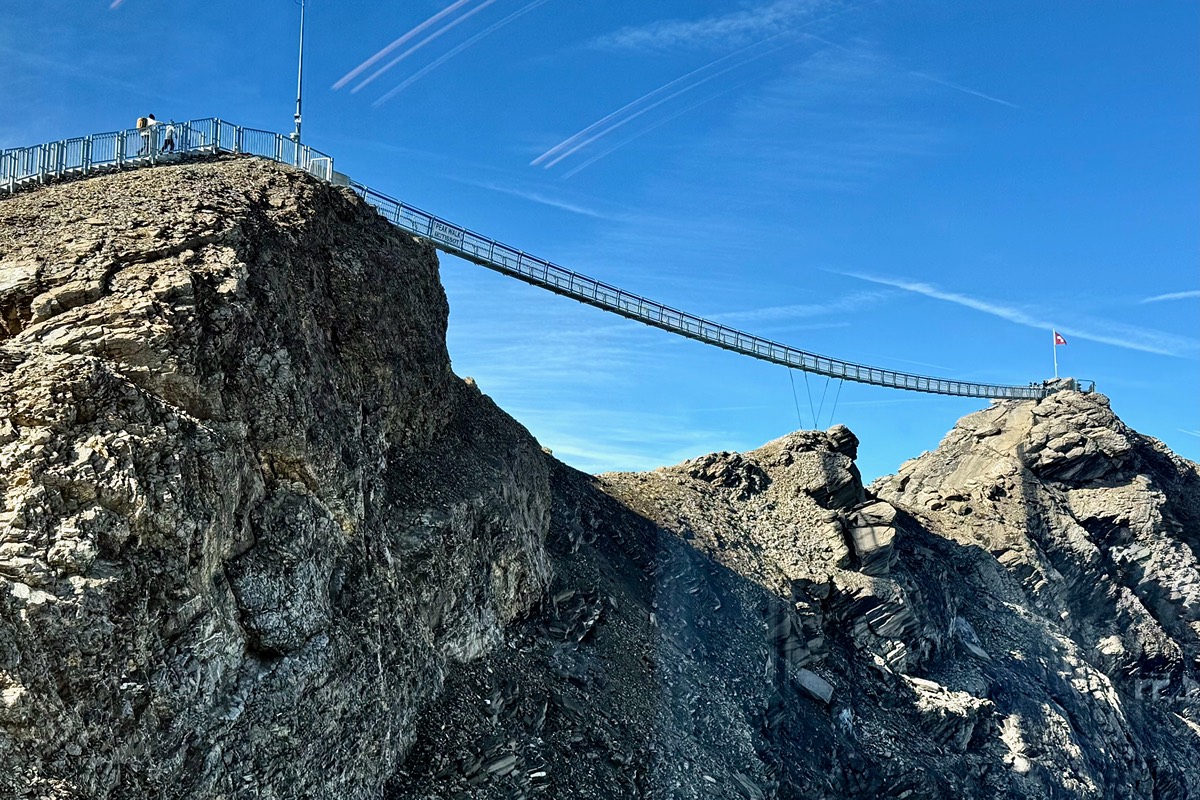
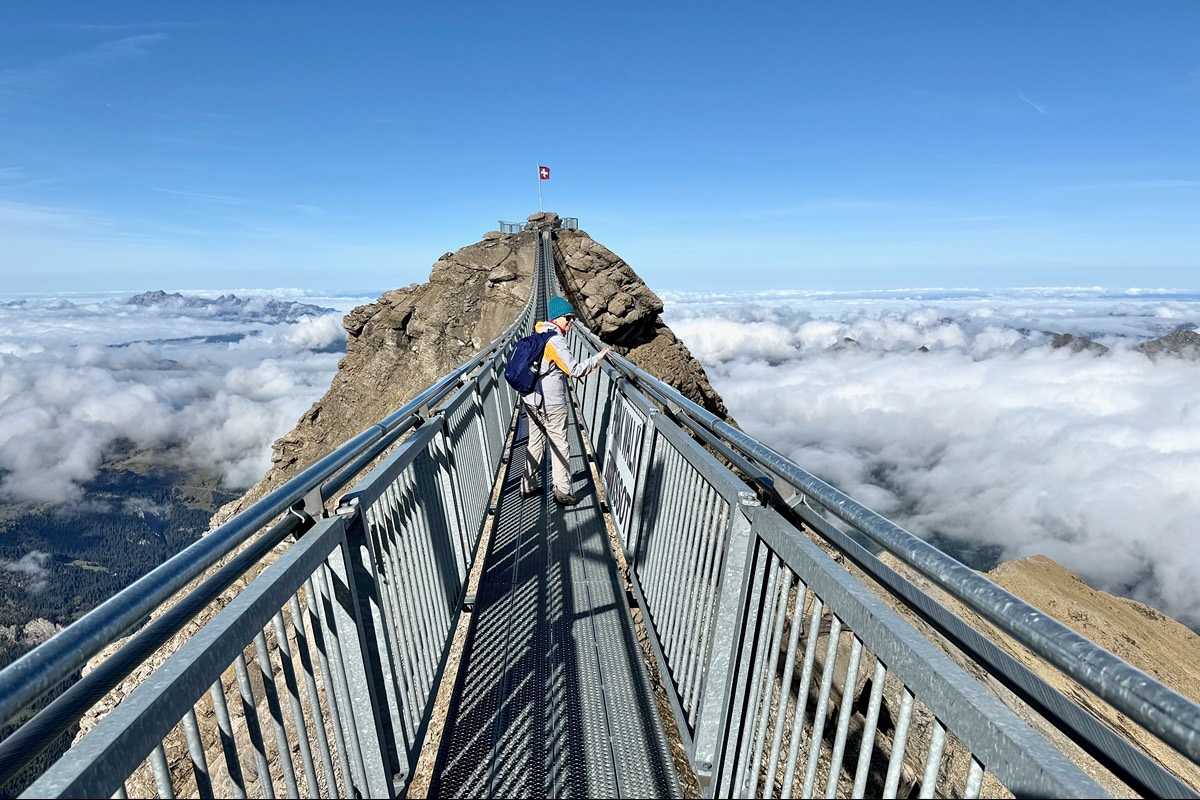
This suspension bridge, the only one of its kind, is slung between the two peaks above the glacier. It was breathtaking – and the views from the viewing platform at the far end were stunning. Back at the top station, I indulged in a Peak Brunch. A speciality offered by the Restaurant Le 3 (booking essential) comprised. It would have taken me all day to do this feast justice, but it was soon time to take the bus to Les Diablerets for my next adventure the Rando-Raclette.
Rando-Raclette in Les Diablerets in Vaud, Switzerland
I met up with a group at the Les Diablerets Tourist Office where we were given our Rando-Raclette kit (charges apply). This comprised the rack for melting our cheese, special raclette cheese, fresh bread, sausage and some bottles of beer. Once we had decided our route we set off on a lovely walk that took us through some woods alongside La Grande Eau River and then across a grassy plain to a picnic site. We sat at a large wooden table sipping beer while waiting for our cheese to melt. It was such a great way to enjoy the very special ambience of the mountains. And a memorable end to my stay in the Swiss canton of Vaud.
Fact File
More info: Switzerland, click here and the region of Vaud click here
Swiss International Air Lines (SWISS): SWISS connects Switzerland with the world, offering more than 160 weekly flights from London Heathrow, London City, Manchester, Birmingham and Edinburgh to Zurich or Geneva. One-way fares start from £76 to Zurich and from £54 to Geneva, and include all taxes, fees and surcharges, one piece of checked luggage weighing up to 23kg and one piece of hand luggage. SWISS are also happy to transport your first set of ski or snowboard equipment and boots free of charge in addition to your standard free baggage allowance subject to availability (excluding hand-luggage-only fares). swiss.com
Travel Switzerland: Travel Switzerland’s Swiss Travel Pass offers international visitors to Switzerland unlimited travel on consecutive days across the rail, bus and boat network, plus scenic routes (seat reservation fees apply) and local trams and buses in around 90 towns and cities. It also includes the Swiss Museum Pass, which grants free entry to 500 museums and exhibitions.
Prices start from £229 for a three-day second-class ticket. travelswitzerland.com